
Artists : Jeppe Ernst & Scenatet
[ performance ]
Time :
Fri • 17:00 (Teater Refleksion)
Sat • 13:00 (DOKK1, outdoor) & 17:00 (Teater Refleksion)
Lokation : Teater Refleksion & DOKK1
Performance by : Scenatet
Cantus is silent music drama about touch, facial expression, and power. en musicians staged as a choir use physical contact and facial expressions as a form of play, where the music itself becomes dramatic action about closeness, distance, and isolation.
Info about the piece
Cantus (Volume III) is a nonverbal work of music drama commissioned by Scenatet from the composer Jeppe Ernst and continues their ongoing collaboration, which also includes the work Interludium—performed at festivals such as SPOR, Passage Festivalen, and CPH Stage.
Both Interludium and Cantus are examples of their shared effort to challenge preconceived ideas about what classical music and music drama are and can be. In an exploration of social dynamics and intersubjective relations, ten musicians staged as a choir perform a nonverbal script consisting of eruptions of gestures, touches, and strokes.
As a kind of opera, Cantus investigates the unspeakable aspects of the loneliness woven into human existence. How intimate, how close can we be to another person, the piece seems to ask – while we simultaneously feel radically separated and estranged from one another. Cantus presents radical stylistic gestures that suggest an entirely new approach to opera and performance. Essential to both Scenatet and Ernst is the attempt to preserve the existential and emotional depth that has always lain at the core of an art form such as opera, while daring to challenge its deeply rooted stylistic conventions. Cantus is yet another example of this endeavor.
At SPOR Festival, audiences can experience the work in different spaces and environments – outdoors as well as in an intimate theatre setting.
Performers will be Kalle Hakosalo, Christoffer Breman, Lukasz Szyszko, Joss Smith, Kevin Thomsen, Þórgunnur Anna Örnólfsdóttir, Marta Soggetti, Clara Stengaard Hansen, Anja Marie Nedremo, and Fei Ni.
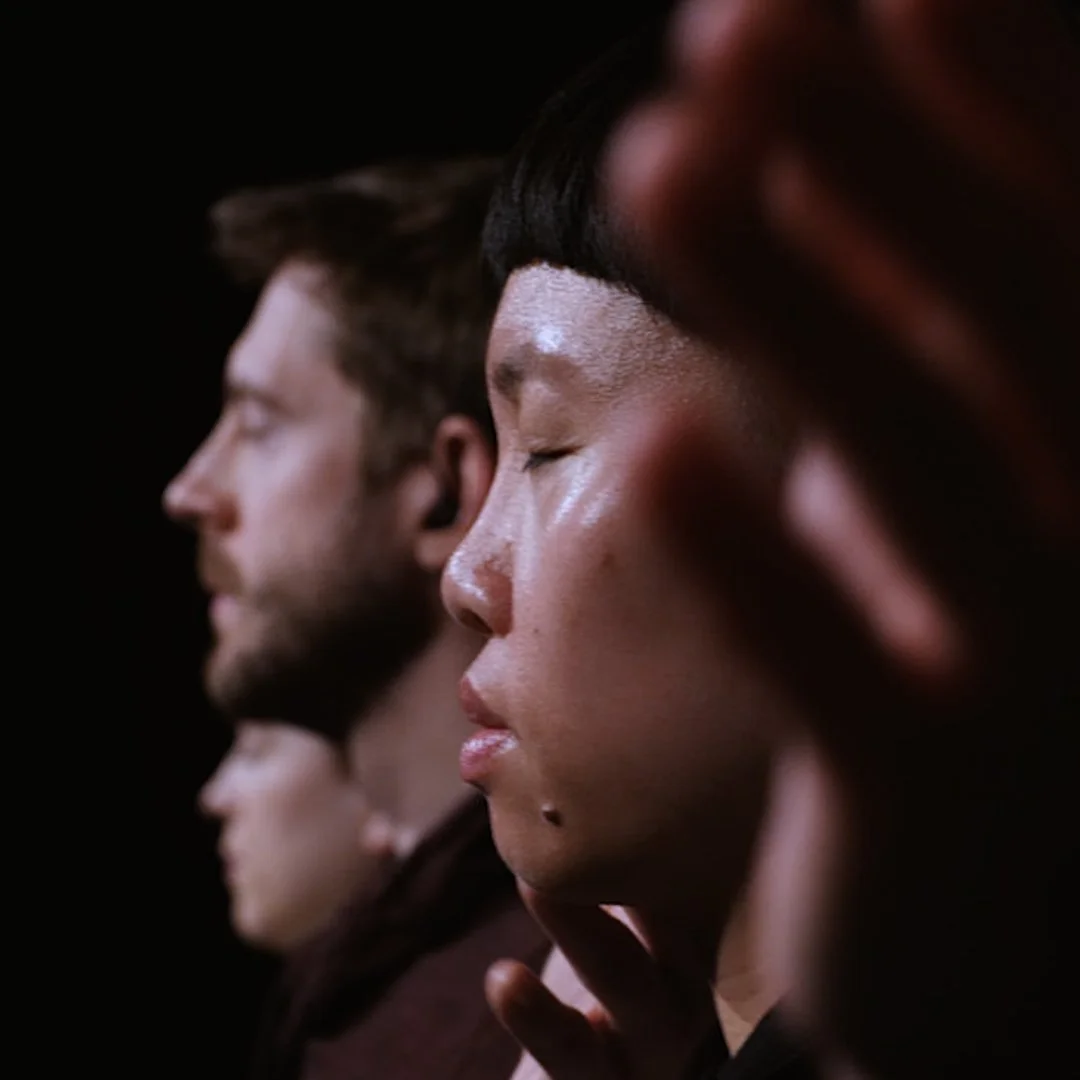
Credit: Niklas Ottander
-
Web: www.jeppeernst.dk
With his radically reduced works, Danish composer Jeppe Ernst (1985) fundamentally challenges our traditional ways of thinking about music – both in terms of the musical expression itself and the way it is presented to us.
By removing all unnecessary layers, he seeks to illuminate the work’s most essential idea, often by eliminating one or more basic musical parameters — for example, audible sound. This approach has led to works directed toward other senses, ranging from smell and touch to direct, individual encounters between artist and audience, where the social dimension of music comes to the fore.
Jeppe Ernst studied composition at the Royal Danish Academy of Music and has released and presented a number of experimental works, including Etudes I–IV (2014), Messe for en menneskekrop (2014), Skibene (2016), and 3 Romantic Songs (2017). He received the Danish Arts Foundation Award in 2015, was the first recipient of the Pelle Prize in 2017, and was awarded the Carl Nielsen and Anne Marie Carl-Nielsen Talent Prize in 2018. His practice is situated at the intersection of score-based music, performing arts, and dramaturgy, where tradition meets innovation.
-
Web: www.scenatet.dk
With roots in score music and a strong connection to performing arts and dramaturgy, Scenatet often operates within an interdisciplinary field where staging and realities across time intersect and merge in innovative and performative formats.
Scenatet was established in 2008 and is recognized as one of the most innovative, sound-driven, and scenic ensembles in Europe. At the helm of this cross-disciplinary performance ensemble is founder Anna Berit Asp Christensen, who, with Scenatet, strives to surprise and break as many habits and traditions as possible, creating artistic experiences and insights that confront and include audiences in new ways.
With a genre-breaking approach and a dramaturgical mindset, she and Scenatet eagerly and exploratively focus on the creative artistic process. Scenatet’s works can be both original productions and co-productions, often in the form of commissioned works for Scenatet.
As a fundamental part of the ensemble’s work, symbioses, and collaborations across fields of expertise are emphasized. Based on an interdisciplinary foundation, Scenatet thus shapes the future of scenic music, ensuring epoch-making works that are unique, often conceptual, and site-specific.
Scenatet has achieved deep artistic insight and works with great integrity and dedication in its artistic strategies. Since its launch, Scenatet has developed an artistic original and international profile and an extensive touring activity, resulting in collaborations with some of the most talented and relevant composers, directors, choreographers, dancers, and musicians from home and abroad.