
Artist : Lars Kynde
[ performance ]
Time :
Sun • 15:00 - 16:10
Location :Åbne Scene
Performance by :Lars Kynde & Krumbuktus
There is a science fiction potential in Lars Kynde’s discovery of magnetic manipulation. This is presented in this lecture performance, which also features a string quartet.
Info about the piece
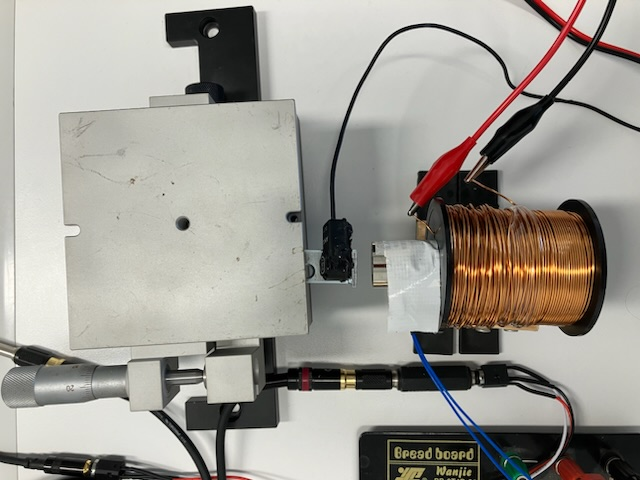
Can the overtone spectra of metal instruments be softened with magnetic fields? And what are the consequences of retuning the intervals of the overtone series? These questions are explored in this lecture performance, where a string quartet plays to a spectral ear, and Kynde presents both music created twenty years ago and music that will only come to life twenty years from now. With one eye directed toward the past and the other fixed firmly on the future, Kynde thus finds themselves in the middle of a forty-year-long project that culminates when the technology is fully developed in 2046. The science fiction potential opened up by the discovery of magnetic manipulation is presented here in the form of a plastic ear training program in six plateaus, intended to make the ears more fluid.
-
For Lars Kynde (1981), music making is a ceremonial framework for human relations. Learning from traditional rituals and ceremonies, they seek to create radically new rituals that recreate the original intentions of such practices within a modern context. They are particularly interested in what ritual performances can teach us about sensory perception. This interest has led them to explore different aspects of synesthesia, asking how the stimulation of one sense affects perception through another. In particular, they investigate how music inspires the senses of sight, taste, and smell, and how experiences through these senses in turn alter both the perception and creation of music.
Kynde has collaborated with other artists within many different types of hierarchical structures. Kynde finds it compelling how the choice of collaborative method shapes the artistic outcome, and how these choices reflect broader social relations and hierarchical patterns in society. Similarly, they believe that the choice of instruments and musical hierarchies is fundamental to the artistic result. This perspective has led them to design and build new mechanical and electromechanical instruments, as well as to develop new systems of musical notation. Over the past twenty years, their works have been performed and exhibited extensively abroad, including in Japan, China, Korea, and many European countries. Drawing inspiration from historical performance practices in combination with modern technologies and free imagination, Kynde’s works suggest an alternative foundation for the future of music.